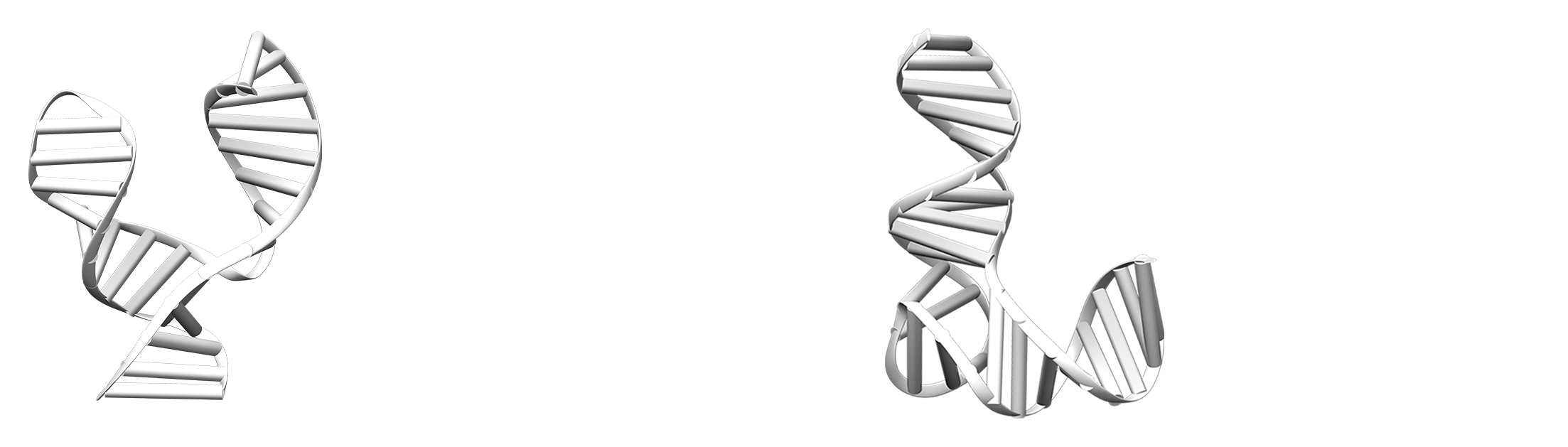
<p>Control over nucleic acid activity is central to biotechnology and therapeutic development. Most existing strategies rely on installing protecting groups that mask nucleobases or backbone functionalities (i.e., chemical caging), where modulation of activity arises from alteration of the biomolecule's chemical identity. Here, inspired by biological mechanisms such as DNA supercoiling that regulate nucleic acid function through mechanically imposed conformational constraints, we introduce mechanical caging as an alternative strategy. A light-driven synthetic molecular motor was integrated with single-stranded DNA through four tethering points, creating a topology that couples motor rotation to DNA conformation. Control experiments confirmed that motor incorporation preserves intrinsic properties of ssDNA, including its ability to hybridize with complementary strands. Upon photoactivation, unidirectional motor rotation drives DNA into constrained conformations that suppress hybridization and reduce susceptibility to exonuclease digestion. Molecular dynamics simulations further provide molecular-level insight into how motor-driven mechanical constraints may impact the conformational ensemble and functional accessibility of nucleic acids. Incorporation of acid-labile tethers enables on-demand motor detachment to restore the native conformational ensemble and DNA function. Together, these results establish an externally controlled mechanical caging–decaging cycle and introduce a strategy for controlling biomolecular function through mechanical input rather than chemical masking.</p>